WHAT IS AI?
What is AI?
AI (artificial intelligence) is the simulation of
human intelligence processes by machines, especially computer systems. These
processes include learning (the acquisition of information and rules for using
the information), reasoning (using rules to reach approximate or definite
conclusions) and self-correction. Particular applications of AI include expert
systems, speech recognition and machine vision.
LAW 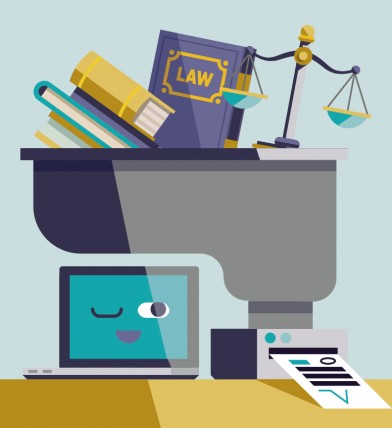
A major chore of obtaining planning permission
for a new development is dealing with neighbouring properties’ “right to
light”. This involves obtaining and examining the title deeds of all properties
likely to be affected and drafting standard notification letters. A city-centre
development might require the examination of hundreds of title deeds.
Traditional law firms give this routine and repetitive work to trainees or
paralegals. However, it is exactly the sort of work that lends itself to
artificial intelligence or AI-based automation.
One law firm to have taken this
step is international city lawyers BLP. Its business case for AI was based on
the fact that capturing relevant details of a property from a Land Registry
title deed and entering them into a system takes an average of 15 minutes to do
by hand. Processing automatically takes seconds. Equally important it produces
consistent results.
Such automation of the
traditional grunt work of lawyering is going on throughout the legal sector.
Several major firms already employ e-discovery systems to sift through
documents, e-mails and other records to identify material that might be
relevant to a piece of litigation. Simon Price, managing director of specialist
IT supplier Recommind, says e-discovery can save 95 per cent of “lawyer time”
in preparing for a case and generate consistency.
Another proven application for
AI in law is to screen claims for personal injury damages for signs of
fraudulent behaviour. Leading insurance firm DWF already does this with big
data analytics. The system maps connections between different factors in claims
and gives each one a score between one and ten to indicate how much or little
input from a human lawyer the case is likely to need.
AI is not only changing
practice within law firms, it is opening access to the law as systems become
available that can reliably draft documents, such as tenancy and employment
contracts, to suit individual circumstances. In their new book The Future of
the Professions, legal futurologists Richard and Daniel Susskind predict that
document assembly systems originally developed for lawyers will increasingly
become accessible to lay users who need to draw up legal contracts on hand-held
computers.
MARKETING
AND ADVERTISING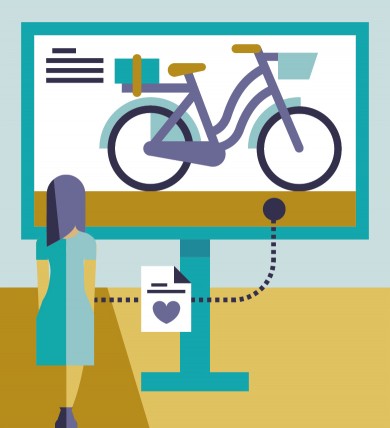
Imagine an advertising hoarding capable of
sensing the presence of passers-by before displaying an advertisement and
learning from their individual reactions how relevant it is. This was the aim
of the artificially intelligent poster campaign demonstrated earlier this year
by a partnership of advertising giant M&C Saatchi and media firms Clear
Channel and Posterscope.
The poster uses a body-tracking
technology originally developed for the Microsoft Kinect system to work out who
is standing in its vicinity, assessing up to 12 people at a time. It displays a
combination of pictures and advertising copy from a “gene pool” and learns from
the audience’s reactions which are the most attractive. These are then picked
by a Darwinian algorithm which eliminates the less successful combinations.
David Cox, chief innovation
officer of M&C Saatchi, claims: “It’s the first time a poster has been let
loose to entirely write itself, based on what works, rather than just what a
person thinks may work.”
Artificially intelligent
posters are still experimental, but AI is being deployed in earnest behind the
scenes in advertising and marketing. One promising development is the
application of pattern recognition and cognitive learning systems to help
process sales leads. “Rachel” a virtual persona equipped with such technology
from supplier Conversica, is being used in vertical markets, including
technology, automotive, education and financial services.
This year saw a significant
tie-up between 6sense, a supplier of predictive intelligence engines for
marketing and sales, and Bombora, a specialist in demographic and intent data.
According to the companies, the integrated system automates the process of
sorting predictively scored companies and contact profiles into campaigns by
buying stage. The custom segment is automatically deployed for programmatic ad
targeting.
Meanwhile, UK-networked
consultancy firm B2E claims that an AI-based system called Role Exchange became
a key differentiator for its business. The system scrapes the web daily for
vacancies in interim consulting roles and sorts the results into useful
categories. “It’s looking at 60,000 potential jobs and categorising them down
to about 200 every night,” says Hugh Abbott, co-founder of B2E. The system was
built on what Mr Abbott calls “tin cans and bits of string” off-the-shelf
technology for around £10,000.
FINANCE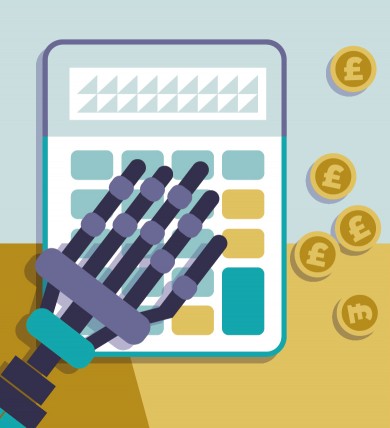
The financial services industry was one of the
first commercial sectors to deploy AI in mainstream business decision-making.
Citibank, for example, was working on first generation expert systems as far
back as the 1980s. Such interest is not surprising given the sector’s reliance
on massive amounts of data. On top of structured data about millions of
transactions held by every financial services business, Reuters publishes 9,000
pages of financial news every day and Wall Street analysts produce five
research documents every minute.
George Roth, chief executive of
Recognos Financial, says some 80 per cent of the underlying data being
processed in the financial services sector remains either semi-structured or
not structured and has to be processed manually. With AI, firms can analyse and
contextualise such data almost instantly. AI technologies being applied in
financial services include natural language processing, data mining and text
analytics, semantic technologies, and machine-learning.
IBM has identified the sector
as a customer for its Watson AI system, which uses natural language processing
and machine-learning to glean insights from large amounts of unstructured data.
IBM says the “ultimate
financial services assistant” is capable of performing deep-content analysis
and evidence-based reasoning to accelerate and improve decisions. For example,
a bank could use the system to make better recommendations of financial
products based on comprehensive analysis of market conditions, the client’s
past decisions, recent life events and available offerings.
Another application is in
compliance, fraud detection and security. Integrating structured and
unstructured data ensures compliance rules are being applied and can help to
detect offences, such as money laundering and insider trading. Natural language
processing systems can uncover subtle cues in transactions that might indicate
behaviour that does not show up in the numbers.
RETAIL AND
CUSTOMER SERVICE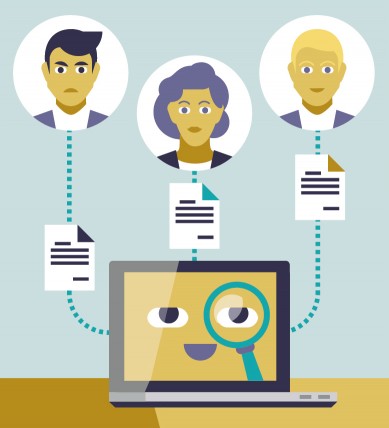
However good, or otherwise, their punctuality
record, train operators have to deal with large volumes of customer complaints.
The Department for Transport requires these to be classified into 470
categories. This was one of the challenges facing Virgin Trains when it set out
to upgrade its customer service operations to meet expectations.
Thanks to the near-ubiquity of
smartphones, a high proportion of customer communications now come in by
e-mail. To improve the processing of these, Virgin deployed an AI platform
called inSTREAM from Celaton, which is capable of categorising unstructured
content and learning new patterns of unstructured data through the natural
consequence of processing it. The system reads e-mails as they come in,
understanding meaning and sentiment, and capturing key data for the customer
relationship management system.
“A process that took 35
man-hours has been reduced to four man-hours a day and increased the speed of answering,”
says Hugh Abbott of consultancy B2E, which worked on the project. “It has been
a complete success.”
The next step in applying AI to
retail service is to automate the conversation with the customer. A tool called
DigitalGenius is already being used in the motor industry to conduct human-like
text conversations with customers. The neural network system is based on what
the supplier calls deep-learning technology. Deployed in a contact centre, the
system provides a level of automation and intelligence to enable interactions
that feel like actual conversations.
Automating customer services is
also a target market for IBM’s Watson technology. The company has announced it
is developing systems with insurer Swiss Re to harness cognitive computing
technologies to identify and act on emerging trends in customer communications
“Insurers need the ability to
spot operational issues or opportunities in real time and respond proactively,”
IBM says. “Cognitive technologies, coupled with human experience and insights,
can enhance and help inform timely decision-making. By applying Watson’s
capabilities, the new platform could allow Swiss Re professionals to make
better-informed decisions and more accurately price risk.”
HEALTHCARE
Medical decision-making was one
of the first applications envisaged for first-generation AI, so-called expert
systems. The vision is now becoming reality.
Among the applications for
IBM’s Watson natural language processing and machine-learning system is a
collaboration with Boston Children’s Hospital to help clinicians identify
possible options for the diagnosis and treatment of rare diseases.
Watson will be trained in
nephrology by reading related medical literature and aggregating information on
causative mutations for steroid-resistant nephrotic syndrome (SRNS), a rare
genetic form of kidney disease. Then, experts at Boston Children’s Hospital
intend to feed genomic sequencing data from retrospective patients into Watson
to further train the system.
The goal is to create a
cognitive system that can help clinicians interpret a child’s genome sequencing
data, compare this with medical literature and quickly identify anomalies that
may be responsible for the unexplained symptoms.
At the other end of the
healthcare environment is the apparently simple matter of ensuring that
patients take the pills they are prescribed. An alarming percentage of patients
do not complete courses of medication, creating dangers ranging from antibiotic
resistance to underestimating the side effects of drugs.
This is particularly crucial in
clinical trials, which often rely essentially on patients’ say-so. Yet where
tests are carried out, they find that fewer than 30 per cent of participants in
clinical trials may be completing their course of medication.
A
mobile phone app called AiCure may provide an answer. The app records people
taking their medication, identifying the patient and drug, with sophisticated
features such as facial recognition to ensure it is not being tricked. The
adherence data is available in real time to organisations conducting clinical
trials, for the first time ensuring they are based on hard data.
ENTERTAINMENT
Believe it or not,
entertainment services, especially online streaming services such as Netflix,
Hulu, Amazon Prime, etc. have really utilized AI. They use machine learning to
study and learn about user behavioral patterns and preferences, as well as
study their habits to recommend them their perfect viewing list. Ever wonder
how Netflix knows exactly what you would like to watch and shows it to you in
your recommendations? Well, it can do this via the use of AI. It uses AI to
accurately recommend shows and movies to each of its 100 million subscribers
worldwide
HIGHER
EDUCATION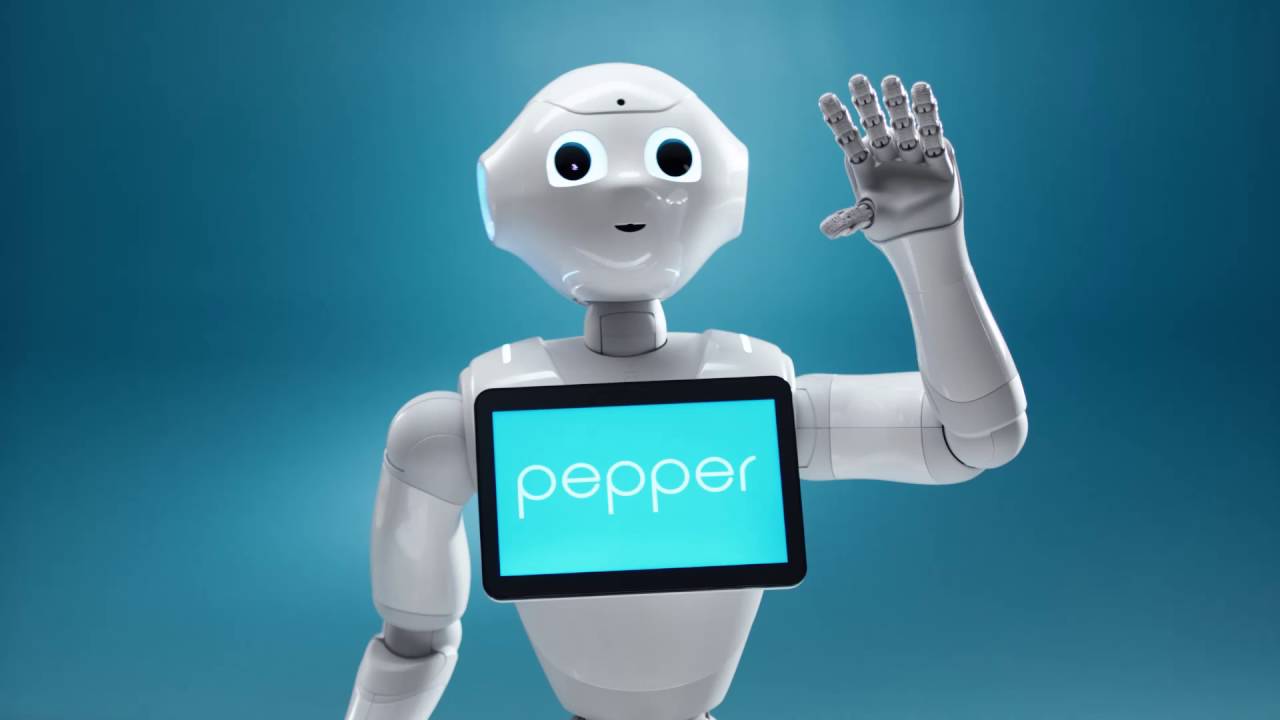
Artificial intelligence is also
about to disrupt the field of higher education. Most importantly, it makes
possible personalized learning that tailors educational content to the needs of
each individual student. Data analytics help implement adaptive learning
programs by allowing educators to collect and analyze data about the
performance and learning style of each student and constantly adjust the
learning material according to their progress.
- Oregon
State University already uses adaptive learning technologies to
personalize their hardest courses that come with the highest attrition
rates.
- Northern Arizona University has
also begun to implement the method university-wide, and DFW rates
(D-grades, F-grades or withdrawals) have already decreased
from 23 to 19 percent.
- Machine
learning can also be used to give immediate feedback on students’ writing
assignments. The University
of Michigan makes use of an automated text analysis (ATA) program
that reviews writing submissions, identifies the strengths and weaknesses
of every student, and recommend revisions to them.
HERE SOME INFO…
1. Germany: Home for some of the largest automation
leaders thanks in part to a tech hub dubbed Cyber Valley between Stuttgart and
Tübingen. Germany also ties for tops in Labour market policies.
2. Singapore: Tied with Germany for the top in Labour
market policies. It has multiple startups from FinTech to smart bikes and was
the pioneering testbed for NuTonomy's self-driving car.
3. Japan: It leads in innovation; Japan's best known
industry in automation is robotics like Softbank's Pepper.
4. Canada: Its strength is education. The Economist
notes that Ontario is adapting its educational systems and teaching approaches
to advanced technologies. And the Federal government in Canada is ranked highly
for encouraging innovation and strong Labour policies.

No comments:
Post a Comment